Genealogy Courses from Ulster Historical Foundation
Genealogy Courses from Ulster Historical Foundation
Irish Genealogy Essentials: A Family History Course
Irish Genealogy Essentials: A Family History Course introduces family historians to the unique nature of Irish genealogical research. It is the most comprehensive Irish-focused genealogy course offered in the UK or Ireland.
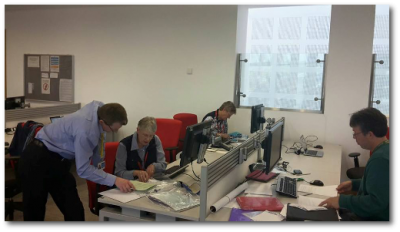
Delivered by the Ulster Historical Foundation’s experienced and expert staff in Belfast’s historic Cathedral Quarter the course will include 3.5 days of engaging genealogy classes complemented by 1.5 days of assisted research in the Public Record Office of Northern Ireland (PRONI). It is ideal if you:
- Have little/no experience of Irish family history research
- Have some experience of genealogical research, but want to develop your skills and knowledge further
- Consider yourself a more experienced genealogical researcher who wants to learn new techniques and learn about lesser known sources
The course will include topics such as: nineteenth and early twentieth century census returns; church and civil records; Griffith’s valuation and tithe records; estate records; as well as wills and testamentary papers, plus an in-depth look at other lesser known sources.
Priced at only £399.99 (or £374.99 for members of the Foundation’s Guild) the classes are delivered by the Foundation’s staff who between them have some sixty years’ experience in helping individuals to trace their Irish family history research.
In just five days the course will equip you with background knowledge on archival sources for Irish genealogy; suggest research techniques and tips; and provide practical experience of using the archives, notably PRONI. It will help to give you the skills and experience to further explore your family history and help you find your elusive Irish and Scots-Irish ancestors.
If you are interested in gaining more research experience Irish Genealogy Essentials is an enjoyable, rewarding and inexpensive way to learn from one of the leading research agencies on the island of Ireland.
Don’t just take it from us, here are some comments from previous attendees:
‘Enjoyable, informative and worth every penny.
R. Stephenson, England
‘The course was inspirational, well-run and also relaxed enough to be fun. We had great input from all our lecturers and a really lovely group of participants – everyone was serious about Irish genealogy but also keen to assist fellow class members too. The lectures were divided into sections and were unfailingly entertaining and very useful. I think the whole group felt like they had been on a successful journey together at the end of the week.’
S. Miller, England
‘The Essentials course for Genealogy offers exactly what it says on the box; a well-balanced, information filled course by a highly qualified team leaving one with the tools to take one’s research to the next level.’
G. Winder
The next course runs from 9-13 October 2017. For more information or to register go to: www.ancestryireland.com/irish-genealogy-essentials/
Towns in the Ulster Plantation Conference
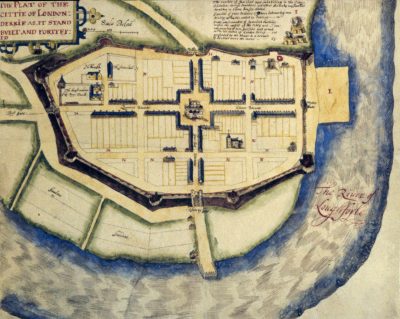
Towns in the Ulster Plantation – A4 Leaflet Folded (3)
A special one-day conference dealing with the Towns of the Ulster Plantation organised by Cumann Seanchais Bhreifne (Breifne Historical Society) and Cavan Genealogy will be held in the Johnston Central Library, Farnham Street, Cavan, on Saturday 14 October.
Line up:
Session 1: The archaeology and geography of Ulster plantation towns
10 a.m.: Dr Rachel Tracey (Queen’s University Belfast): ‘Uncovering Ulster Plantation towns: rhetoric, reality and resonance’.
10.25 a.m.: Dr Jonathan Cherry (Dublin City University): ‘Ulster’s Plantation towns: a geographical perspective’.
10.50-11.05: tea and coffee
Session 2: Urban administration
11.05 a.m.: Dr Brendan Scott (Roots Ireland): ‘The Town Book of Belturbet, County Cavan, 1657-1700: administration in an Ulster Plantation town’.
11.30 a.m.: Dr Bríd McGrath (Trinity College Dublin): ‘Creating and managing a new town: Coleraine 1623-1669’
11.55: 5 minute break
Session 3: Case Studies
12 p.m.: Dr William Roulston (Ulster Historical Foundation): ‘“The Scottish town”: Strabane in the late sixteenth and early seventeenth centuries’.
12.25 p.m.: Dr Annaleigh Margey (Dundalk I.T.): ‘Building early modern property portfolios: London’s urban influence in seventeenth-century Ulster’.
12.50-2 p.m.: Lunch
Session 4: Urban Plantation Society
2 p.m.: Professor Raymond Gillespie (Maynooth University): ‘The marketplaces in Ulster plantation towns’.
2.25 p.m.: Dr Paddy Fitzgerald (Mellon Centre, Ulster-American Folk Park): ‘Urban Ulster, Dublin and the problem of the poor in the early modern period’.
2.50 p.m.: 5 minute break
Session 4: Religion
2.55 p.m.: Professor Robert Armstrong (Trinity College Dublin): ‘Planting Protestantism in urban Ulster’.
3.20 p.m.: Professor Colm Lennon (Maynooth University): ‘Catholicism and Ulster Plantation towns’.
VENUE: Johnston Central Library, Farnham Street, Cavan
DATE: Saturday 14th October
TIME: 10 a.m. – 4 p.m.
TO BOOK: Contact Cavan Genealogy
First Floor, Johnston Central Library and Farnham Centre, Farnham Street, Cavan
Hours: Monday to Friday 9.00am to 1.00pm / 2.00pm to 5.00pm
Phone: +353 (0)49 436 1094
Email: cavangenealogy@eircom.net
Fee: €10.00
Fee is non-refundable and must be paid in full at time of booking. To guarantee your seat, early and full booking is essential. All major credit cards including Visa, Mastercard and Laser are accepted.
Special Offer from RootsIreland – Get one-third off a 12 Month Subscription
One-third off a 12 Month Subscription for RootsIreland for a limited time in September 2017.*
 Get a 12 month subscription for RootsIreland with one-third off from 7 September to 17 September 2017.
To obtain this offer just go to the following link and login using your existing RootsIreland login details: http://www.rootsireland.ie. If you currently have a subscription, click My Account, My Subscription and Start a New Subscription.
If you have any questions please check our Help section and if this does not provide an answer, then you may contact us or one of the county centres. You can check what is available on our site for each county here.
*Offer applies from 12 midnight Irish time on 7 September 2017 to 12 midnight Irish time on 17 September 2017 only. Cannot be used in conjunction with any other offer.
The Genealogy Event 2017, Adare, County Limerick
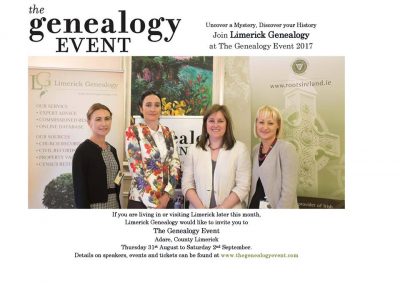
For the fourth year running, the Genealogy Event will be visiting County Limerick. Sponsored by RootsIreland.ie, it runs from Friday 1st September to Saturday 2nd September at Woodlands House Hotel, Adare, County Limerick. It offers a wealth of up to date information on researching your Irish ancestors using familiar genealogical resources, but also some lesser known sources. For further details, please see www.thegenealogyevent.com.
Tracing Your Irish Ancestors – Family History Conferences 2016
Following on from our successful 2015 conference programme, the Ulster Historical Foundation will be hosting two family history conferences in June and September 2016. Both events will combine a varied and exciting mix of research opportunities in the archives (including the Public Record Office of Northern Ireland, the National Library, the National Archives and the Registry of Deeds in Dublin), talks from acknowledged experts and a choice of tours to a number of historic sites, including Kilmainham Gaol and Trinity College, Dublin, Barons Court, the palatial country house of the Duke of Abercorn in County Tyrone, Titanic Belfast and the world famous Giant’s Causeway.
The Foundation’s popular conferences are therefore ideally suited to the keen family historian who will be given assistance by our experienced genealogists throughout the week and also those who favour learning more about the Ireland of their ancestors as we travel through our verdant countryside en route to our selection of famous sites and locations.
Our June event will run from 15-22. For more information and guidance on how to register please visit http:www.ancestryireland.com/family-history-conference/summer-2016/
The website for our second event to be held from 4–10 September 2016 should be operational very soon.
Feedback from the delegates who attended our recent conferences has been extremely positive with many considering a return to our shores in 2016. We hope that you will also join us in 2016 for a truly memorable experience.
Lecture on Revolution and the Irish Country House: burnings and enforced exile 1919–23
The Christmas lecture, Revolution and the Irish Country House: burnings and enforced exile 1919 – 23 by Terence Dooley, Maynooth University, will take place on Monday, 14 December at 7.15 p.m. (please note earlier time) followed by optional dinner in The Gold Saloon and Drawing Room
The burning of Irish country houses during the War of Independence and Civil War was a phenomenon which until the publication of Terence Dooley’s book, The decline of the big house in Ireland in 2001, had received little or no attention from historians. This talk provides an insight into the motivation for the burning of country houses nationwide. Drawing on new research from papers in private possession it also provides an in-depth insight into the fate of two country house families caught up in revolutionary change between 1919 and 1923.
Light refreshments served from 6.30pm
Admission fee per lecture: €10.00 payable prior to the lecture or on the night
Admission fee for Christmas lecture including dinner in The Gold Saloon & Drawing Room: €50.00
(Dinner for the Christmas Lecture must be booked and paid for in advance)
Please note that as numbers for dinner are limited places must be booked and paid for in advance. Seating in the Gold Saloon will be filled on a first come, first served basis.
Enquiries to Carton House only at Telephone: (01) 6517708 and Email: sales@cartonhouse.com
Irish Georgian Society and the Institute of Conservators-Restorers in Ireland study day
The Irish Georgian Society and the Institute of Conservators-Restorers in Ireland’s Heritage Housekeeping: philosophy and practice study day, takes place in the Saloon at Russborough, County Wicklow on Thursday 26th November (cost €90 including lunch).
Katy Lithgow, the Head Conservator for the National Trust UK will deliver the keynote paper. This will be a highly practical day with advice on the storage, display, cleaning and care of all aspects of collections from paintings and paper to furniture and textiles.
Bookings can be made through the Irish Georgian Society website http://www.igs.ie/uploads/Heritage_Housekeeping_booklet.compressed_(1).pdf
My Adopted Soldier
This new website is a unique archive of Irish Soldiers in World War I which was researched and compiled by secondary school History students in Ireland.
Check the site out at My Adopted Soldier
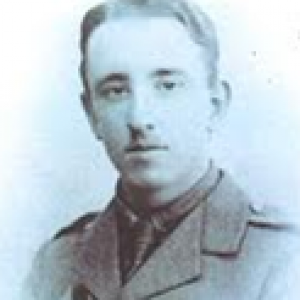
James Lyle Hay, Co. Galway from www.myadoptedsoldier.com
Foremost and ready. Kildare and the 1916 Rising
The latest book from James Durney, well-known historian and author, is now available. It tells the story of Co. Kildare and its involvement in the 1916 Rising, providing a chronological account of the days before, during and after the Easter Rising. This study records Co. Kildare’s huge involvement in these momentous events and reveals a story that has not previously been told using many sources available for the first time, along with eyewitnesses’ testimonies.
On Easter Monday 1916 1,600 men, women and children went out to fight for an independent Ireland. They faced the most powerful empire in the world. The battle raged in Dublin for six days and resulted in 485 deaths and the destruction of many parts of the city. While mainly a Dublin affair many of the Volunteers were from outside the city; two dozen Kildare men and women took part in the Rising, including fifteen who walked from Maynooth to the General Post Office. Several Kildare natives and residents were killed on all sides in the Rising, while dozens more were wounded or imprisoned in the aftermath.
The subsequent execution of the leaders of the Rising awakened a generation to the cause of Irish freedom. In the succeeding War of Independence and Civil War the Kildare men of 1916, including Domhnall Ua Buachalla, Tom Harris, Pat Colgan, Michael Smyth and Éamonn Ó Modhráin, would play their part.
This book is aimed at the general reader or anyone interested in the history of Co. Kildare and the 1916 Rising. It is a vital source for teachers, students and researchers who are interested in this period of Irish history.
Foremost and Ready. Kildare and the 1916 Rising will be formally launched on Friday, 20th November 2015 at 7.30 p.m. in the Council Chamber, Naas Town Hall by Cllr. Fiona O’Loughlin, chair of the Co. Kildare Decade of Commemorations Committee. All welcome.
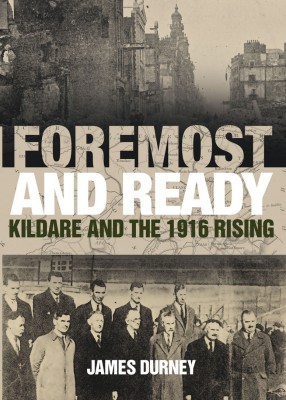
The book is available in all good bookshops.
Lecture on Castletown house, Maynooth, Co. Kildare
On Monday, 16 November 8.00 pm Jeanne Meldon (vice-chair and a director of the Castletown Foundation) will speak on teh topic:
From green pastures to designed landscape: new reflections on the evolution of the
Castletown demesne and the role of the forgotten Conolly
Castletown today comprises a large demesne with parkland, riverside walks, woodland and areas under tillage. In the 17th and 18th centuries the Castletown lands were much more extensive and included much of the town of Celbridge as well as lands to the north and west of the current demesne. The mid to late 18th century period in the history of the designed landscape is well known. This presentation covers the earlier period of William (Speaker) Conolly and Katherine, and also of his eventual heir, William Junior, in many respects the ‘forgotten’ Conolly. It attempts to map the outline of the demesne lands at the time of the acquisition of Castletown and the surrounding lands, and charts the accompanying story of growth and shrinkage as fortunes changed and resources dwindled over the centuries.
How extensive were the lands purchased by Conolly in 1709? It has previously been suggested that the demesne did not extend to the Liffey until after the 1760’s; this paper suggests that this was in fact not the case. Were the 1740’s and 1750’s the fallow period that has often been suggested or did the Speaker’s nephew have a greater role than has hitherto been believed; to what extent were the influences of his wife, Anne Wentworth, brought to bear on the Conolly landscape of Castletown? These are some of the questions explored in this presentation, which uses much of the documentary evidence that survives in the Castletown papers in the Irish Architectural Archive.
Light refreshments served from 7.15pm
Admission fee: €10.00
Enquiries to Carton House only. Telephone: (01) 6517708
email: sales@cartonhouse.com