New Census Substitute Records for Antrim and Down!
We are delighted to announce the addition of 11,964 census substitute records for Antrim and Down to the Roots Ireland database! They are as follows:
Act of Union Petitions, 1799-1800 (Down) – 760 records
The Act of Union was passed in 1800 and came into force on 1 January 1801. The Irish parliament was abolished and henceforth Irish MPs represented their constituents at Westminster. During the debates associated with this petitions both for and against the Act of Union were drawn up across Ireland. Some of these petitions were county-based, while others were from parishes or manors. Several were published in the Belfast Newsletter in 1799-1800.
Supporters of and Subscribers to Charitable and Public Causes, 1781-1900 (Antrim & Down) – 5218 records
This database brings together a diverse range of historical records documenting individual and collective contributions to charitable, religious, social welfare, and community improvement initiatives across Ireland from the late 18th to the late 19th century. The index consolidates subscriber and donor information from a variety of distinct sources, providing insight into patterns of philanthropy, civic engagement, and local support for public causes during this period.
Included in the database are the following sources
- A list of those who contributed to the funds of the House of Industry Belfast, 1834
- Building Fund for New Mater Hospital, Belfast, 1894 (Mater Infirmorum Hospital Publications)
- Contributors to an Envelope Collection for New Mater Hospital Belfast, 1900 (Mater Infirmorum Hospital Publications)
- Contributors to Ballymoney Mendicity Association, 1832-1833 (Ordnance Survey Memoirs of Ireland: Parishes of County Antrim V, Volume 16)
- Hillsborough Charitable Society Subscribers, County Down, 1836-1837 (Ordnance Survey Memoirs of Ireland: Co. Down III, Vol. 12)
- List of Subscribers to the Belfast Charitable Society with Statement of Accounts, Belfast, 1830
- Members of Central Committee appointed in 1894 to raise funds for new Mater Hospital (Mater Infirmorum Hospital Publications)
- Persons who Donated Money at Formal Opening of New Mater Hospital Belfast, 1900 (Mater Infirmorum Hospital Publications)
- Rebuilding of First Derry Presbyterian Church, List of original contributors 1781 (Derry Standard, 14 June 1855)
- Reward for information relating to the murder of Joseph Beard, Derrynoose Co. Armagh (Reward Subscribers Derrynoose Co. Armagh, 1795)
- Subscribers to charity sermon at opening of new Mater Hospital, Belfast, 1900 (Mater Infirmorum Hospital Publications)
- Subscribers to Newry Workhouse, 1834 (Ordnance Survey Memoirs, Co. Down I, Vol. 3)
- Subscribers to the Killyleagh, Killinchy, Kilmood and Tullynakill branch North-East Farming Society, 1835 (PRONI, D3550/1)
- Subscribers to the Leckpatrick Famine Relief Committee, 1846-1847 (Famine Relief Commission Papers, NAI RLFC 3/2/28/36)
- Subscription List for new church in Crossgar (Irish News, 03 June 1899)
Irish Emigration Records, 1773-1939 (Antrim & Down) – 681 records
This database brings together a number of sources including workhouse registers, passenger lists and newspaper reports detailing the names and locations of individuals emigrating from Ireland. It has been prepared by transcribing the following sources:
- Passenger List – Athenia 1939
- Passenger List, Dorcas Savage Portaferry to New Brunswick, 1819
- Passengers of The Brig Jessie, 1830
- Perished on Board the Athenia, 1939 (Northern Whig 5th Sept., 1939)
- Emigrants from Counties Antrim and Londonderry, 1830s
- Passenger Lists, 1803 – Newry, County Down to USA
- Birth, Marriage and Death Notices Published in Local Newspapers, Journals and Memoirs, 1785-1889 (Antrim & Down) – 316 records
This database includes notices that appeared in a range of local publications from the late eighteenth century to the late nineteenth century. In addition to the name of the individual appearing in the notice, the person’s place of residence and occupation may also be given. It has been prepared by transcribing the following sources:
- Belfast Medical Society Obituaries, 1825-50
- Belfast Literary Journal, 1816
- The Microscope, 1799-1800
- Memoirs of Downpatrick and its Parish Church, 1852
Tenant farmers on different estates in Ulster, 1651-1903 (Antrim & Down) – 2314 records
This database provides an index to tenant farmers working on different estates across the province of Ulster between 1651 and 1903. It has been prepared by transcribing the following sources:
- Lairn’ [Larne] alias Gardenmore in the County of Antrim as surveyed in the year 1735 by Archibald Stewart (Old Map of Larne Estate)
- Rental of the Rowan Estate, County Antrim (PRONI, D/1835/15B)
- Hertford Estate Rent Roll, 1728
- Names of tenants and townlands on Skinners’ Company estate, County Londonderry (PRONI)
- Antrim estate leases for Ballymoney, 1705-1895
- Index to 18th-Century Tenant Farmers,1750-1781 (Belfast Newsletter)
- Index to lessees in Newry from the Kilmorey estate papers (PRONI, D2638/B)
- Brownlow estate papers, PRONI (D/1928), Registry of Deeds, Dublin, and Belfast Newsletter
- Tenants on the Blackwood Estate in County Down, 1741 (PRONI) T/808/15009
- Rent Roll of the Clanbrassil Estate, County Down (The Hamilton Manuscripts, ed. T. K. Lowry (Belfast, 1867)
Matriculated and Non-Matriculated Students (Antrim) – 949 records
This database includes the names and year of entrance for matriculated, and non-matriculated students, at Queen’s College, Belfast between 1849 and 1860. In some instances, the address, religious profession and faculty will also be included alongside the name of the student.
Freeholder Index (Antrim & Down) – 1728 records
This index combines a number of databases and sources, listing freeholders registered to vote in Counties Antrim and Down between 1747 and 1837. The index includes the name and residence of the freeholder and location of freehold. The name of the candidates to whom the elector gave his votes may also be included (remembering that each elector could vote for two candidates in county elections). It should also be borne in mind that Catholics were not permitted to vote between the late 1720s and 1793.
Included in this database are the following sources:
- Index to the Freeholders registered to vote in elections, Co. Antrim 1776
- Index to the Freeholders registered to vote in elections, Co. Down, 1832-1837.
To search these records, go to Roots Ireland and Login or Subscribe as required. Select the county in question, click on ‘Census Substitutes …’ and you can select an individual source.
New Kerry Records Added!
We are delighted to announce the addition 7203 Roman Catholic baptisms covering 1829-1911 for Moyvane parish, Co. Kerry to our database at Roots Ireland! For an up to date list of sources for Kerry and to search these records, go to kerry.rootsireland.ie and login or subscribe as required.
2026 Irish Family History Conferences
Ulster Historical Foundation are pleased to announce that the booking pages for their 2026 Irish Family
History Conference’s are now Live!
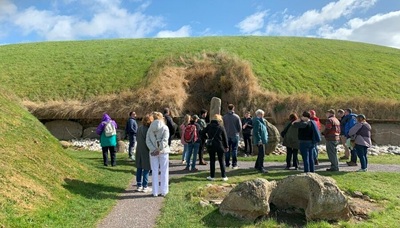
Early Booking Offer -£100 Deposit
Each programme has a strict limit on the number of attendees, and places are already being filled due to
early bookings and expressions of interest from our mailing lists. Secure your place today with a low
deposit of just £100 to avoid disappointment (offers end 30 November 2025)
Make 2026 the year you finally uncover your elusive Irish ancestors!
3-Day Research Conference, 21–24 June 2026
This enhanced research programme gives you the chance to spend three days researching in the archives
– being guided and supported by our team of researchers. The programme revolves around focused
research sessions that are designed to help you make real progress with your family history.
Delegates at the Foundation’s 2025 programmes indicated that the shorter 3-day schedule very much
suited their travel needs (some included the 3-day programme at the start of a longer trip/vacation or only had a limited time they could devote to research in Belfast), thus the Foundation is pleased to enhance their 2026 schedule by offering a 3-Day Research Conference in June 2026
Click here to register with just a £100 Deposit (Full price £649.99)
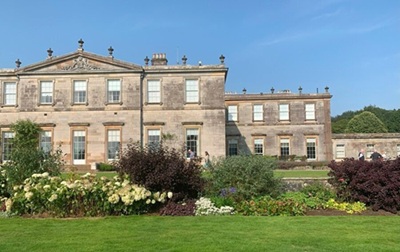
Return of the Ulster Historical Foundation’s “classic” week-long Conference
02-09 September 2026
‘It’s back’! The Ulster Historical Foundation’s “classic” week-long family history conference returns in
September 2026 – promising a delightful mix of personal research, guided tours, and experiences that bring your family history vividly to life.
Whether you come on your own, as a couple, with friends, research partners, or as part of a larger group,
this is your chance to combine meaningful research and genealogical breakthroughs with an unforgettable Irish experience.
Over eight inspiring days, you can:
Dive deep into your family story with assisted personal research in Belfast’s archives
– Explore Ireland’s historic sites and cultural treasures on guided tours
– Soak in breathtaking landscapes while tracing your family history
– Learn more about the land and experiences of your ancestors
– Share the experience with like-minded family historians eager to connect to their ancestors
As with previous Tracing Your Irish Ancestors programmes delegates will be able to shape their own
experiences by choosing to either research in the archives or join the Ulster Historical Foundation’s staff on daily excursions through Ireland’s beautiful landscape to some of its most historic sites, or a mixture of the two.
Click here to register with just a £100 Deposit (Full price £1,199)
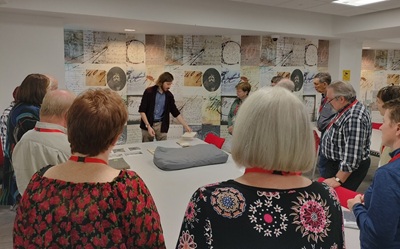
5-Day Research Conference, 04–09 October 2026
Immerse yourself in a week of discovery with Ulster Historical Foundation’s enhanced 5-Day Research
Conference, designed for those eager to make significant progress in uncovering their family history.
Over five focused days, you will work in the archives with personal guidance and support from the
Foundation’s experienced research team, ensuring your time is productive, rewarding, and inspiring.
This 5-Day research conference is always one of the Ulster Historical Foundation’s most popular
programmes, and is ideal for genealogists seeking extended, hands-on research sessions, with expert
guidance to help break through brick walls and make meaningful progress in uncovering their family history.
Click here to register with just a £100 Deposit (Full price £949.99)
New Records added!
We are delighted to announce the addition of 41,356 census substitute records from Counties Antrim, Down, Fermanagh, Wexford, Cork, Dublin and Kerry to our database at Roots Ireland. They are as follows:
- Apothecary and Apprentices, Cork, Dublin, Fermanagh, Kerry, Wexford
This database contains records of apprentices to the trade of apothecary and licensed Apothecaries. It displays name, date of application, residence and county.
The list is taken from the following British Parliamentary Papers;
- A return of the name of each person in each year since the 24th June 1791, who has been examined by the governor and directors of the Apothecaries’ Hall in Dublin, and who has received a certificate of his proper qualification to become an assistant or journeyman to the business of an apothecary. 1829: XXII [British Parliamentary Papers, HC 1829, XXII]
- A return of the name of each person in each year since the 24th June 1791, who has been examined by, and received a certificate from the governor and director of the Apothecaries’ Hall in Dublin, of his qualification to open a shop and practise as an apothecary in Ireland. 1829: XXII [British Parliamentary Papers]
Dublin Electors, 1865
This database contains the names of some 10,700 electors in the County of Dublin. It is interesting to note that some of those registered as electors in Dublin at this time resided outside of Ireland. For example, we find electors with an address in Hamilton, Montreal and Toronto in Canada. From further afield, we note Edward T. Mulhall and Michael Mulhall in ‘Buenos Ayres’ in Argentina. The Mulhall brothers made significant contributions to journalism and publishing in Argentina in the second half of the nineteenth century.
The list of electors is taken from “City of Dublin Election, July 15th, 1865 .. List of Electors for the Year 1865”
Forfeiting Proprietors, Cork, Dublin, Kerry, Wexford
This database of just under 2,500 entries details the names of those, mostly Irish Catholics, by county & barony, whose estates were confiscated as part of the Cromwellian settlement of the 1650s.
In some cases the actual locality was recorded, in others a note describing the person was included, for example “killed at the siege of Derry, as a beseiger” or “A Scotch Protestant, and in Arms agst, the State, in 1649”.
This list of names has been transcribed from: O’Hart’s Irish Landed Gentry when Cromwell Came to Ireland.
Freeholder Index, Fermanagh
This index lists around 1,500 freeholders registered to vote in county Fermanagh between 1747 and 1768. The index includes the name and residence of the freeholder and location of freehold. The name of the candidates to whom the elector gave his votes may also be included (remembering that each elector could vote for two candidates in county elections). It should also be borne in mind that Catholics were not permitted to vote between the late 1720s and 1793.
Students, Cork
This database includes the names and year of entrance for matriculated, and non-matriculated students, at Queen’s College Cork and Galway between 1849 and 1860. In some instances, the address, religious profession and faculty will also be included alongside the name of the student.
Outlawries for treason, Cork, Dublin, Wexford
This database was created from a manuscript volume held by the Library of the Oireachtas in Dublin and available online through the Library’s catalogue. It lists the names and addresses, and occasionally status or occupation, of those outlawed for treason in 1641-7 and 1691-8 (it also records the place of outlawry). The volume was prepared in 1833 at the behest of the House of Lords.
Publication Subscriber List, Cork, Dublin, Fermanagh, Kerry Wexford
Many older books include lists of those who subscribed to the volume, thus helping to pay for its publication. Usually, the address of the subscriber is included and sometimes the occupation of the individual. This list has been compiled from a number of different publications including:
- A List of subscribers to the book Heterogenea’or Medley for the Benefit of the Poor, 1803
- List of Subscribers to the Historic Memorials of the 1st Presbyterian Church of Belfast, 1887
- Poems by the Late Hugh Tynan of Donaghadee, 1803
- Subscribers to William Crawford’s History of Ireland, 1783
- Subscribers to James Orr’s Poems on Various Subjects, 1804
- Subscribers to Samuel Lewis’s Topographical Dictionary of Ireland, 1837
- Subscribers to Andrew McKenzies Poems and Songs on Different Subjects, 1810
- Subscribers to John McKinlay’s book on the Giant’s Causeway, 1819
- Subscribers to John Anketell’s Poems on Several Subjects, 1793
- Subscribers to Odes and Elegies, Descriptive & Sentimental: With The Patriot, A Poem by John Corry, 1797
- Subscribers to Samuel Thomson’s Poems on Different Subjects, Partly in the Scottish Dialect, 1793
- Subscribers to John Searson’s A Poem or Rural Entertainment’, 1795
- Subscribers to ‘Taylor and Skinner’s Maps of the Roads of Ireland, 1778
- Subscribers to John Cameron’s The Messiah, 1768
- Subscribers to The Sure Way to Heaven by a Co. Antrim priest, Rev. MacCary, 1797
- Subscribers to William Anderson of Saintfield’s Poetry Collection, 1830
8. Rental Of Land Gable Rents, Dublin, 1665 Dublin
‘Landgable’ rents would now be called ground rents and this database covers houses and their occupiers in Dublin at an interesting period in the city’s history.
Given that spellings of names varied considerably, a small number of changes have been made to the names to assist the researcher. For example, the double f, as in ffisher, has been changed to a single f and capitalised, and where V is really U, as in Usher, this has also been amended.
A few comments of interest appear. For example, William Gee was recorded as someone who “defies the Sherr [sheriff] & all their authority”.
The list has been transcribed from the 57th Report of the Deputy Keeper of the Records in Ireland (1936)
School Register Index, Fermanagh
This database is a curated compilation of historical educational records taken from a report produced by the British House of Commons. This list details the school master and the school in County Fermanagh in which they worked for the years 1826-1827. The list has been transcribed from the original British Parliamentary Paper report.
10. Muster Rolls, Fermanagh
A muster roll was a list of able-bodied men who were capable of military service. The most important of the muster rolls of the early seventeenth century period was that compiled between the spring of 1629 and the spring of 1633 by Lieut. William Graham, the muster-master of Ulster. The full muster roll was published as Men and Arms: The Ulster Settlers, c. 1630, edited by R.J. Hunter and prepared for publication by John Johnston (2012). Hunter and Johnston’s edition includes much supplementary information on the settlers, drawn from numerous contemporary sources, such as the Ulster inquisitions, state papers and the 1641 depositions. This database comprises an index to the muster roll relating to Co. Fermanagh. Along with the name of the settler, the index includes the name of the owner of the estate and, if recorded, the barony (or sometimes the town or lordship).
11. Pension List, Cork, Dublin, Fermanagh, Kerry, Wexford
The Census Search Forms or ‘Green Forms’ were completed by the staff of the Public Record Office of Ireland from information supplied by applicants for the Old Age Pension seeking evidence of their age. The Old Age Pension was introduced in 1908 and the ‘Green Forms’ were made between 1910 and 1922. Civil Registration of Births, Marriages and Deaths was not begun in Ireland until 1864 and birth certificates were not therefore available for persons of eligible age (70 years). Proof of age could be obtained in a variety of ways including searches in parish registers, army records and the census. The ‘Green Forms’ were used as an internal office record of the search made in the census.
12.
Ulster 1900 Directory, Fermanagh
This database contains a list of the inhabitants of in County Fermanagh 1900, listing individual names, occupations and addresses. The list has been transcribed from the Belfast and Ulster 1900 Directory.
13. Flaxgrowers Index, Cork, Fermanagh, Kerry
This database is based on the information contained in the Flax Growers’ Bounty List which was published by the Irish Linen Board in 1796. There are only two copies of the original printed volume known to exits, one is held by the Linen Hall Library in Belfast and the other by the Irish Linen Museum in Lisburn.
It is a valuable substitute for non-existent census material for this period in Ireland, with this list containing the names of around 4,500 small farmers flax in the counties of Cork, Fermanagh and Kerry in 1796 who received an award of a spinning-wheel or loom in return for planting certain amounts of flax.
14. Anti-Repeal Declaration, Cork, Dublin, Fermanagh, Kerry, Wexford
In the late 1840s, opposition to the campaign to repeal the Act of Union resulted in the creation of a number of petitions in support of maintaining the connection with Great Britain.
This database is taken from a printed volume held in the Library of the Oireachtas, Dublin, containing the names of over 3,500 individuals who subscribed to one of the anti-repeal declarations in the spring of 1848.
Typically, for each signatory there is also an occupation and an address (often the townland of residence and its nearest town or village). The declaration includes names from every county in Ireland, but this list details those from Counties Cork, Dublin, Fermanagh, Kerry and Wexford.
To search these records, go to Roots Ireland and Login or Subscribe as required. Select the county in question, click on ‘Census Substitutes …’ and you can select an individual source.
Special Offer running now – 25% off annual subscriptions!
Don’t miss out on our special offer running now – 25% off a twelve month subscription!

Why take out a subscription to Roots Ireland?
RootsIreland have the most complete and most accurate set of Roman Catholic church records online, as well as millions more Protestant records, civil records, census records, headstone inscriptions and census substitutes. Our index is easily searchable and has features such as standardised surname and forename searches which make your searches even more user-friendly.
We hold over 23 million records, and our database is being added to continually. In 2025 alone, we have added over 107,000 records from Antrim, Down, Kerry, Tipperary, Monaghan and Cork. In 2024, we added over 154,000 records from Monaghan, Kerry, Armagh, Mayo, Clare and Tipperary.
Together, our 32 genealogy centres have an unparalleled amount of local knowledge which can be invaluable to those tracing their ancestors, a service which no other website or company can provide to such a high standard. By taking out a subscription with RootsIreland, you are helping these centres to continue to provide a world-class service and securing many Irish jobs.
If you have any questions please check our Help section and if this does not provide an answer, then you may contact us or one of the county centres. You can check what is available on our site for each county here.
*Offer applies from 3 September 2025 to 12 midnight Irish time on 18 September 2025 only. Cannot be used in conjunction with any other offer.
Michael Dwyer 200
MICHAEL DWYER 200
Michael Dwyer 200 is a two-day event commemorating the 200th anniversary of the death of the renowned “Wicklow Chief,” Michael Dwyer, leader of the 1798 rebellion. This Heritage Week event is scheduled for 23rd and 24th August in Glenmalure, Co. Wicklow.
Join us on Saturday, 23rd August for a one-day seminar that explores Dwyer’s legacy. The program will feature talks focusing on his early life in the Glen of Imaal, his role in the 1798 rebellion, the aftermath of the rebellion, his exile to Australia in 1806, and his significant legacy within the Irish community in Australia until his death in 1825.
The guest speakers include:
- Carmel O’Toole, Local Historian, Glenmalure Resident, and Author
- Dr. Ruan O’Donnell, University of Limerick, who has written several historical books, including a biography of Michael Dwyer
- Dr. Perry McIntyre, Australian Historian and expert genealogist
- Dr. Joan Kavanagh, Author and Historian.
Following speeches from our distinguished guests, we will unveil a specially commissioned piece in memory of Michael Dwyer on this significant anniversary. This full-day event will take place in the grounds next to Glenmalure Lodge.
On Sunday, 24th August we will host a guided bus tour starting in Glenmalure. This tour will explore sites associated with Michael Dwyer, including Barravore Valley, The Military Road, Dwyer/McAlister Cottage, The Glen of Imaal, Rathdangan, and Dunlavin villages. This tour is organised in partnership with West Wicklow, Rathdangan and Donard Historical Societies, providing a unique opportunity to discover locations and stories related to Dwyer, along with a “Living History” performance.
In conjunction with these events, an educational pack on the Leaders of the Rebellion has been reimagined through Wicklow County Council Archives and will be distributed to all secondary schools throughout the county.
Additionally, a recently launched four-part podcast series on the history of The Military Road, curated by Fin Dwyer and Wicklow County Council Heritage Office, offers excellent context for the Michael Dwyer 200 commemorations. This podcast is available from the Irish History Podcast at https://shows.acast.com/irishhistory/episodes/irelands-bandit-country-the-wicklow-military-road.
Cathaoirleach of Arklow Municipal District Cllr. Miriam Murphy, commented, “It is wonderful that Arklow Municipal District, Wicklow County Council, and the organising committee have coordinated this important program of events. I am grateful to all who have contributed their time and expertise to make this program a success, especially the local communities who treasure and preserve the history of their localities.”
Chief Executive of Wicklow County Council Emer O’Gorman, stated, “Wicklow County Council is proud to support the Michael Dwyer 200 commemoration program, honouring our famous 1798 Rebellion leader, Michael Dwyer, and marking this important period in our county’s history. I look forward to the events that will be held in August in Glenmalure.”
Cllr. Pat Kennedy, Chairperson of the Michael Dwyer 200 Committee, remarked, “I am proud of the program developed to remember and honor our own Michael Dwyer. This program began with an under-13 GAA match—the inaugural Michael Dwyer Memorial Cup—and has evolved into a two-day event featuring guest lectures, the unveiling of a specially commissioned monument, a tour of Dwyer landmarks, and a re-enactment event.”
These events will be an integral part of Wicklow County Council’s Heritage Week program, and we are grateful for the funding contribution from The Heritage Council for the Sunday tour as part of the County Wicklow Heritage Plan.
To book your place, please visit the Eventbrite links below:
- Saturday, August 23rd: One Day Seminar (full day event) https://www.eventbrite.com/e/michael-dwyer-200-saturday-23rd-august-registration-1358221520129?aff=ebdsshcopyurl&utm-campaign=social&utm-content=attendeeshare&utm-medium=discovery&utm-term=organizer-profile&utm-share-source=organizer-profile
- Sunday, August 24th: Guided Bus Tour (full day event) https://www.eventbrite.com/e/michael-dwyer-200-sunday-24th-august-2025-tickets-1422035810389?aff=ebdsshcopyurl&utm-campaign=social&utm-content=attendeeshare&utm-medium=discovery&utm-term=organizer-profile&utm-share-source=organizer-profile
For further information, please email arklowmd@wicklowcoco.ie.
Special Offer Running Now – 20% Off Annual Subscriptions!
Don’t miss out on our special offer running now – 20% off a twelve month subscription!
Why take out a subscription to Roots Ireland?
RootsIreland have the most complete and most accurate set of Roman Catholic church records online, as well as millions of Protestant records, civil records, census records, headstone inscriptions and census substitutes. Our index is easily searchable and has features such as standardised surname and forename searches which make your searches even more user-friendly.
We hold over 23 million records, and our database is being added to continually. In 2025 alone, we have added over 107,000 records from Antrim, Down, Kerry, Tipperary, Monaghan and Cork. In 2024, we added over 154,000 records from Monaghan, Kerry, Armagh, Mayo, Clare and Tipperary.
Together, our 32 genealogy centres have an unparalleled amount of local knowledge which can be invaluable to those tracing their ancestors, a service which no other website or company can provide to such a high standard. By taking out a subscription with RootsIreland, you are helping these centres to continue to provide a world-class service and securing many Irish jobs.
If you have any questions please check our Help section and if this does not provide an answer, then you may contact us or one of the county centres. You can check what is available on our site for each county here.
*Offer applies from 1 July 2025 to 12 midnight Irish time on 16 July 2025 only. Cannot be used in conjunction with any other offer.
The wait is over – Townland Atlas of Ulster is back in print!
Ulster Historical Foundation is delighted to announce that the Townland Atlas of Ulster is once again available to purchase from their online bookstore
This landmark publication has been in high demand, and Ulster Historical Foundation are thrilled to make it accessible once more to researchers, genealogists, and local history enthusiasts.
The Townland Atlas of Ulster maps all 16,000 townlands in the 9 counties of Ulster and the administrative units of church and state into which they have been organised. In an attractive and easily understood layout, these units are shown in the context of land ownership in the 17th century, a pattern clearly recognisable until a century ago when the Land Purchase Acts broke up the estates and facilitated tenant farmers buying their own land. By using the maps and index, family and local historians can easily grasp the essentials of their ancestors’ lives – where they worked, paid their rent, went to church and market, etc.
This is an essential reference guide for both newcomer and serious researcher, showing exact locations and where to look for related records.
Don’t miss your chance to secure this essential reference guide and invaluable family history resource — stocks may not last long
Click here for more information
Read what others have said about the Townland Atlas of Ulster
“Today, as Ireland becomes increasingly urbanised and new housing estates proliferate, authentic townland names are in danger of disappearing. A wonderful book such as this is, therefore, invaluable in maintaining a record of a rich shared heritage and a culture, north and south, that speaks to everyone.”
Prof. Terence Dooley, Maynooth University Department of History
“The design of such an ambitious undertaking has been undertaken with consummate care, skill and deftness and contributes significantly to a work which not only shows researchers the precise location of their areas of interest but also suggests other primary sources and their location that may well help them develop their search.”
Trevor Parkhill, editor Familia: Ulster Genealogical Review
“To have mapped and provided such comprehensive detail for each of Ulster’s 16,000 townlands is an achievement that will stand the test of time. It (the Townland Atlas of Ulster) will or should become a standard reference book for those people tracing their Ulster roots. I now know that if I’m seeking a visual representation of townlands, parishes and estates in a particular area I will be straight to your maps; and if seeking, for a particular townland, details of church registers (CoI and RC) and 17th and 19th century landlords my first port of call will be the Index of Townlands.”
Brian Mitchell, Derry Genealogy
“I received the Townland Atlas of Ulster this morning and am delighted with it. The quality of the book is exceptional and the content fascinating. As someone who is fascinated by maps, and loves the townlands where I grew up in County Down, it unexpectedly made me feel quite emotional to see them memorialised so beautifully. It will certainly be a big help to my research, especially as I pursue DNA matches who relate to my unknown great grandfather in County Antrim, territory unfamiliar to me. I just wanted to congratulate everyone on its production and of course particular thanks go to Andrew Kane.”
Lyn from Encinitas
“What a marvellous resource it is! Please congratulate Andrew. I’ll be using it all the time as my (never-ending) Irish research continues.”
Michele from NSW
“The beautiful atlas has arrived. It is a magnificent publication.”
Ann from Canberra
“I received my pre-ordered copy today and must say it’s an incredible piece of work to have. A great reference book. Well done to all involved !!!”
Paddy from Gweedore
“A magnificent achievement – I look forward to delving into the vast array of resources beautifully arranged and presented.”
Larry from Maynooth
“My copy of the Townland Atlas of Ulster arrived safely yesterday. To say that I am thrilled with it is an understatement. It’s a wonderful book with superb production values, packed with information. I probably will not get much work done this weekend as I explore it in more detail.”
Angela from Dublin
Scheduled Maintenance
Our servers are undergoing scheduled maintenance during the following times:
Monday 23rd June 8pm to 9pm Irish time. (19:00 UTC)
The service may be unavailable for up to 1 hour during the above time period, although this could be longer.
We apologise for any inconvenience caused
Scheduled Maintenance
Our servers are undergoing scheduled maintenance during the following times:
Wednesday 18th June 8pm to 9pm Irish time. (19:00 UTC)
The service may be unavailable for up to 1 hour during the above time periods, although this could be longer.
The service will experience temporary unavailability.
We apologise for any inconvenience caused
- « Previous Page
- 1
- 2
- 3
- 4
- …
- 35
- Next Page »