Gleeson Clan Gathering 19-24 August, 2016
The Gleeson Clan Gathering will take place on 19-24h August 2016. A variety of lectures, tours, and excursions have been arranged for each day. The Gleeson Clan Gathering starts in Nenagh, moving to Silvermines, Dolla and Thurles, all in County Tipperary, Ireland. The Gathering has already generated a huge amount of interest both locally and internationally from Gleesons and non-Gleesons alike, but everyone is welcome to attend. Thanks to the incredible generosity of local people, most of the events and activities are completely free.
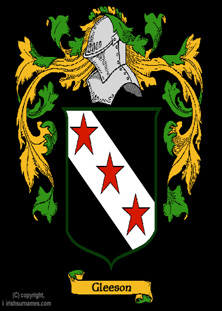
If you have any questions, simply email. There is an ‘Early Bird’ offer so make your reservation today! For further information visit our blog at: http:/gleesongathering.blogspot.ie Email:gleesonclan2016@gmail.com
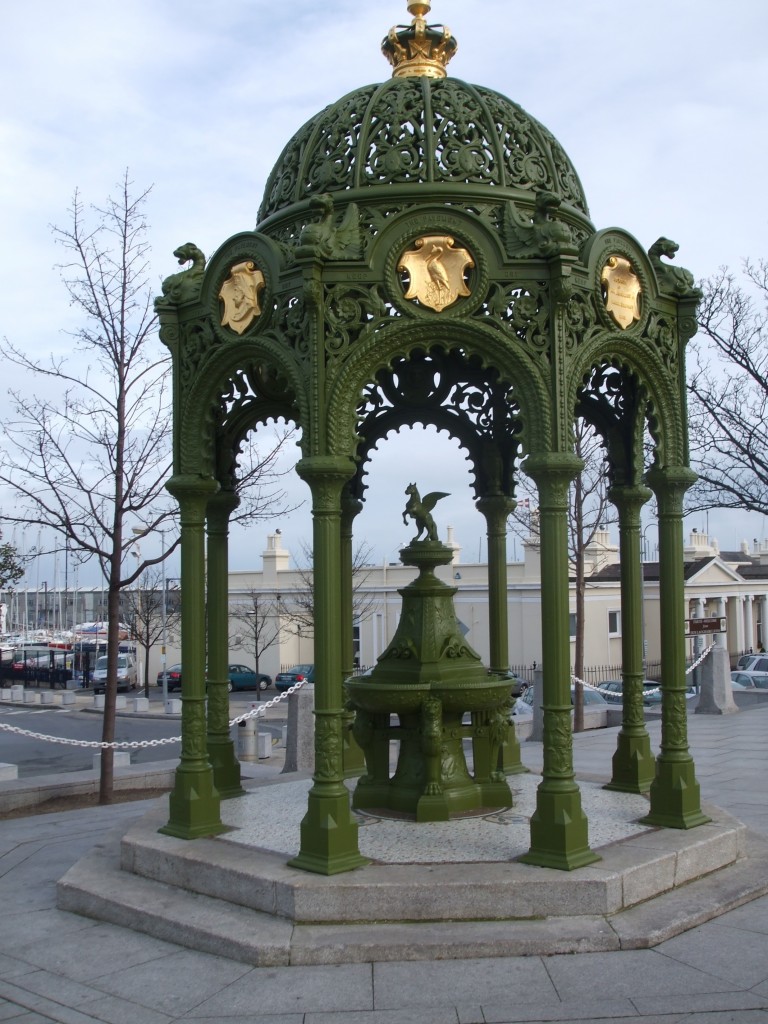
Aspects of Dun Laoghaire Rathdown at the time of the Rising 1916
Some 1916 connections with Dun Laoghaire Rathdown are explored by Catherine Malone.
You can contact Catherine, of the Dun Laoghaire Rathdown Heritage & Genealogy Centre at cmalone@dlrcoco.ie The Dun Laoghaire Rathdown Centenery Programme of Events can be found at www.ireland.ie
In 1916 Kingstown (now Dun Laoghaire) still wore the mantle of a prosperous Victorian town, with elegant squares, rows of fine terraced houses, mansions and private villas dotted throughout the region. Many of the inhabitants of the houses were successful merchants and entrepreneurs. The more modest homes were those of working class families who were mainly employed in building work or in the local stone quarries. The 1901 Census recorded a large proportion of local men and women were employed as gardeners and domestic servants in the big houses.
As a busy maritime port with major commercial, mail and passenger services the town received a steady flow of visitors. An added attraction was the annual regatta, an event that attracted visitors and yachting enthusiasts from all over the yachting world. This celebrated event was hosted by the Royal St. George, one of the more exclusive yachting clubs that border the harbour.
The population, who were mainly Protestant, were devoted to maintaining the bond with England. Some nationalists were content with the promised Home Rule, already on the statute books, improved economic conditions and reforms that saw some Catholics reaching middle class status. However, a small body of nationalists believed that Home Rule did not go far enough, and the only way to an independent Ireland was through rebellion.
Rebellion 1916
Over 170 people from Dun Laoghaire and environs took part in the Easter Rising. Among them were some of the leaders who were born in or associated with the area prior to 1916.
Padraig Pearse (1879-1916) was born in Dublin. Founder of St. Enda’s School (Scoil Éanna) in Cullenswood House in Ranelagh, a suburb of County Dublin, in 1908. The pupils were taught in both Irish and English. Two years later the school moved to The Hermitage in Rathfarnham, County Dublin, now home to the Pearse Museum. William Pearse, brother of Padraic, along with Thomas MacDonagh and Joseph Plunkett, all prominent in the Rising, were teachers at St. Enda’s.
Pearse was dedicated to the revival of the Irish language and the school became an important centre for the Irish language movement in Dublin. He became an early member of the Irish Volunteer Force where his talent as an orator brought him to the attention of the Irish Republican Brotherhood, a secret oath-bound society founded in the U.S.A. He subsequently became a member of the Military Council, the inner circle who planned the Rising.
On Easter Monday 1916, Pearse stood outside the General Post Office, Sackville Street, (now O’Connell Street) Dublin, and read the Proclamation of the Irish Republic to a small gathering, unsure of what was happening. The document, fresh off the press, was signed by six other members of the military force – Thomas J. Clarke, Sean MacDiarmada, James Connelly, Thomas MacDonagh, Eamonn Ceannt and Joseph Plunkett. The long awaited insurrection was now a reality.
Sir Roger Casement (1864-1916) born in Doyle’s Cottage, Sandycove, Co. Dublin. He worked for the British Consular Service where he received an knighthood for his work in the Belgian Congo. He later became disillusioned by the British establishment, and returned to Ireland offering his services to the Irish cause. He travelled to Germany as envoy for Ireland, seeking support and military aid for the forthcoming rebellion.
On 10 April 1916, the German cargo ship, the Aud, left the port of Lubeck with a shipload of rifles bound for Ireland. However, the plan was foiled; as the ship neared Tralee Bay, Co. Kerry, there was no response to the agreed signal of a flashing light. The Aud had no alternative but to leave Irish waters. Casement, travelling by submarine U19, bound for Banna Strand, Co. Kerry, was later arrested and sent to England to await trial. He was found guilty and sentenced to death for high treason. He was excuted on 3 August, 1916.
Eamon De Valera (1882-1975) born in New York, U.S.A. Gaelic scholar and avid supporter of the Irish language movement in Dublin. He was educated at Blackrock College, Co. Dublin, excelling in the subjects of Irish and mathematics He subsequently become professor of mathematics at the Teachers’ Training College, Glasthule, Co. Dublin, where he remained up to 1916.
As a member of the Irish Volunteer Force, he led the Second Battalion at Boland’s Mill, a large bakery overlooking the main road from the port of Dun Laoghaire to the city. This was a strategic position, as over two thousand British troops had set up camp there awaiting orders to march into the city. De Valera, was the last to leave his post following news of surrender. He was reprieved from execution because of his US nationality and went on to become Taoiseach and later President of Ireland.
Countess Markievicz (1868-1927) Born Constance Gore-Booth in London into a family of wealth and title, she and her sister Eva were brought up in the genteel manner appropriate to the upper classes at that time. Constance was popular in both English and Irish society where she was befriended by William B. Yeats and Maud Gonne. Following her marriage to the Polish Count, Casimir Markievicz, she returned to Ireland. Her admiration for Jim Larkin, an Irish patriot, and his passionate oratory in support of the working classes, inspired her interest in nationalism. She became a member of Sinn Fein; in 1909 she co-founded Na Fianna, an Irish boy scout movement which she also funded.
She bought a small cottage in Sandyford, Co. Dublin, at the foot of the Dublin mountains. Here she lived on and off, initially pursuing her hobbies of painting and walking; however, the cottage and surroundings environs became the perfect training camp for the boy scouts, many of whom went on to join the volunteer force that fought at her side during the Rising. Markievicz, was posted as second in command at St. Stephen’s Green Garrison because of her ability with firearms. The garrison saw little action, as the main focus was on Mount St. Bridge and the city centre. After her capture she avoided execution because of her gender. See more about her cottage at https://fiannaeireannhistory.wordpress.com/2014/01/14/wm_2235-jpg/
Patrick Moran (1888-1921) born in Crossna, Co. Roscommon. Patrick Moran lived and worked in Blackrock and Dun Laoghaire, Co. Dublin, prior to the 1916 Rebellion. A labour activist and strong supporter of the nationalist cause, he was sworn into the secret association of the Irish Republican Brotherhood, and subsequently became part of the volunteer force stationed at Jacob’s Biscuit Factory during the Rising. Following the orders to surrender, he was arrested by the British and sent to a number of prisons in England, and Wales. Although Moran avoided execution in 1916 he was later tried and sentenced to death by hanging for the alleged shooting of a British soldier. He was executed in March 1921 despite evidence of his innocence.
Major John MacBride (1868-1916) born in Westport, Co Mayo. In the late 1800s MacBride emigrated to South Africa where he became a soldier of note, fighting against the British in the Boar War. On Easter Monday he left his home in Spencer Villas, Glasthule, Co. Dublin to go into the city. He was unaware of the imminence of the Rising until he reached Sackville Street.
Because of his past military experience he volunteered his services and was immediately posted as second in command at Jacob’s Biscuit Factory, Bishop Street, Dublin. Following his capture at the end of the Rising, he was tried and sentenced to death.
New Records Online for Fingal/North Dublin Genealogy Centre
New Records Online for Fingal/North Dublin Genealogy Centre
Fingal/North Dublin Genealogy Centre has added over 30,000 new records to its online database at Dublin North The new records include St. Margaret’s RC baptisms and marriages, county council interments, many new marriage records for Skerries, Balbriggan, Rush and Lusk, as well as various other additions and updates to all of its databases.
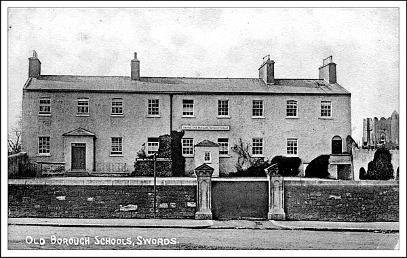
The full list of available sources for the Fingal/North Dublin Genealogy centre can be viewed at Dublin North
New publications for Derry researchers
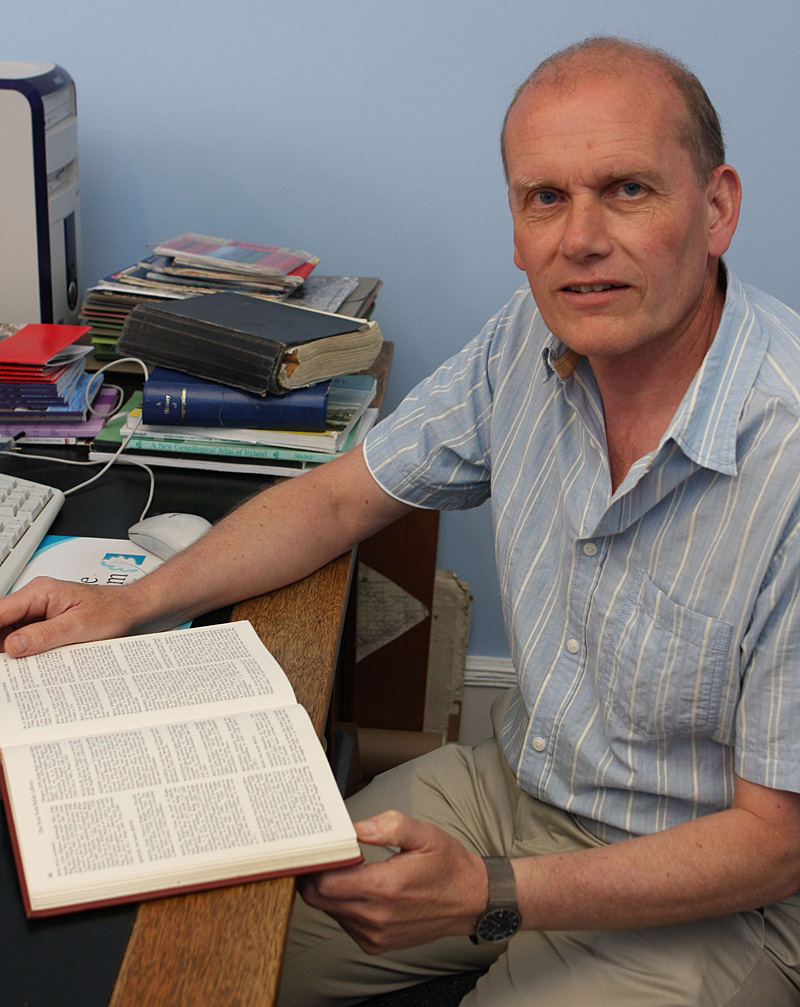
Two new books by Brian Mitchell, the genealogist with Derry City and Strabane District Council, are now available. The Derry genealogy service is part of the Irish Family History Foundation and you can find out more about the service at www.rootsireland.ie/derry-genealogy
The People of Derry City, 1921: Extracted from the Derry Almanac and Directory available via www.genealogical.com
This publication by Irish genealogist Brian Mitchell lists inhabitants, in alphabetical order by surname, in Derry city in 1921. As transcribed here, the work contains five fields: Surname of Head of Household, First Name of Head of Household, Street Address, House Number, and Page Number of the listing in the Derry Almanac. In all, the Derry Almanac and directory of 1921 name 8,288 heads of household in Derry city.
Especially significant about the 1921 directory for Derry researchers are its references to Derry inhabitants amidst the turmoil of (1) the June 1920 six-day “civil war” between Nationalist and Unionist supporters in Derry city, which left 23 people dead and many wounded, and (2) the subsequent Irish War of Independence and Anglo-Irish Treaty, from 21 January 1919 to 6 December 1921. In effect, this work from Brian Mitchell is the closest thing we have to a census for Derry during this period of upheaval.
The Place Names of County Derry
Available via www.genealogical.com – The Place Names of County Derry
The Place Names of County Derry consists of two parts. In Part One researchers will find a list of 1,750 place names, in alphabetical order, as recorded in the 1901 census returns for the city and county of Londonderry (also known as Derry). Part Two, County Derry Parish Reports, features record sources–both civil and church–of value to family historians, compiled and recorded by parish.
Ballarat Benevolent Society Register of Inmates 1860-1897
This transcription of the inmate registers of the Ballarat Benevolent Society is an ongoing project by Brett Weinberg. The inmate registers belong to Ballarat Health Services, who, with Brett, have allowed the transcripts to be published on the Ballarat Historical Society website.
There is an alphabetically searchable list of the inmates of the Ballarat Benevolent Asylum in Victoria, Australia, providing details of age, birth place, parents names, residence, arrival date in Victoria, Australia, and remarks.
www.ballarathistoricalsociety.com/index.php/the-collection/bbsr
Thanks to Brett for letting us know about this source.
Some news from our member centre, the Ulster Historical Foundation
The Foundation’s move to the Corn Exchange – An update from the Executive Director
Our recent move to new offices in the Corn Exchange is already helping to transform the Foundation’s ability to engage with those who we exist to serve. And it is increasing our ability to interact more with the general public, who are curious about their history.
In the short time that we have been operational in the new premises we have already been able to host three events with an international dimension:
A presentation by representatives of the Maine Ulster-Scots Project who discussed their archaeological dig in Somersett, Maine – a settlement of Ulster immigrants dating from the early eighteenth century.
A visit by representatives of Ancestry’s ProGenealogists team (from Salt Lake City and Dublin).
A morning exploring Ulster ancestral research with a group of family historians who are currently touring with the British Isles Family History Society of Greater Ottawa (BIFHSGO).
This is in addition to the already increasing number of personal research consultations that we are providing for local people and overseas visitors interested in their Ulster roots.
This is why the Foundation sought to move to the city centre – to be more accessible to our users and so we can continue to develop more practical partnerships with kindred organisations (e.g. The Belfast Charitable Society (Clifton House), Linen Hall Library, Tourism Northern Ireland, and of course the other organisations with which the Foundation shares the building).
Moreover we have made it easier for ordinary folk to use the services and benefit from the knowledge of the Foundation’s team in the new offices. The central location is easing the burden on our team of volunteers, some of whom are disabled, and for whom the old unit at Malone Road was a less than perfect location.
Furthermore, the installation of a new elevator in the building will soon be completed meaning our accessibility for disabled visitors will be enhanced ensuring the Foundation’s staff can welcome everyone who wishes to call. It also means we have been able to increase the number of intern and placement opportunities for local students, and have had expressions of interests already about the possibility of providing summer internships for some overseas students.
Therefore we would like to offer a huge note of thanks to everyone who has helped to support the move through practical assistance or by ’buying a brick’. Your generosity is greatly appreciated by the volunteers, staff, and trustees. It has enabled the Foundation to open a new chapter in our history, in the sixtieth anniversary year since the organisation was established.
The fundraising contributions have made it possible to complete the move and install most of what we need. We are a little short still of where we would like to be – to date we have raised £27,875, leaving a shortfall of £2125, thus if you think you can help by making a donation, we would be delighted to have you join our band of supporters.
It has been a busy 3 months since we moved to the Corn Exchange (at the end of January 2016), and we have had some fun bringing order to the chaos of storage crates – the joy and despair of moving – with which anyone who has moved house will be familiar.
You can see how we are progressing by visiting our updated photo gallery of images related to the move. And do revisit from time to time, as you will see other important developments taking shape – including the installation of our new library.
Thank you again for generously supporting our fundraising, we hope you can see the positive change and improvements the relocation is already bringing to the work of this charitable organisation.
Best regards
Fintan Mullan
Executive Director
www.ancestryireland.com
Family History Conferences 2016 – Discover your Irish roots with the Ulster Historical Foundation
Tracing your Irish Ancestors Conferences with the Ulster Historical Foundation, Belfast
Places are filling up quickly for Ulster Historical Foundation’s Tracing your Irish Ancestors family history conferences in June and September 2016. In fact the June event will sell out soon (only 8 places are available). If you are interested in attending this programme we suggest you book now to avoid disappointment.
The Foundation’s genealogy conferences are aimed at both the dedicated family historian and those who may prefer to spend more time savouring the enchanting landscape and historic sites of their ancestors.
The programmes will comprise an engaging and entertaining mix of research in the archives with the help of the Foundation’s experienced genealogists, talks from acknowledged experts and a variety of tours and day trips, all making for a memorable experience.
Highlights include: visits to Titanic Belfast and the Giant’s Causeway, the National Archives in Dublin and the Public Record Office of Northern Ireland (PRONI) in Belfast, the famous Walls of Derry and the hills of Donegal, dinner at Belfast’s historic Reform Club and afternoon tea at Barons Court, home of the Duke of Abercorn.
So if you are thinking of a research trip to Ireland, there is no better way to learn how to use the Irish archives than by booking a place at our Tracing Your Irish Ancestors conferences. You will be very welcome.
For more information please visit the following websites:
Summer Conference – 15th to 22nd June 2016
www.ancestryireland.com/family-history-conference/summer/
Autumn Conference – 4th to 10th September 2016
www.ancestryireland.com/family-history-conference/autumn/
If you have any queries please email: enquiry@uhf.org.uk
Testimonial from 2015 conference attendees:
Loved this conference last month and so glad I visited the Antrim coast. Wonderfully organized and learned so much history. Highly recommend
Maureen Hanlon, California, USA
What a wonderful week this was, I cannot believe just how many places that we all visited together, thank you so much to everyone involved in all the hard work for giving us such a wonderful time, I also met up with many new friends.
Kay Howard, Essex, England
This conference was extraordinary. It was exceptionally well organized by the most accommodating and professional people – not to mention their wonderful sense of humour. Although I wasn’t able to learn any more about my own ancestors, I did learn a great deal and have new sources of information to explore. Then perhaps another visit to Belfast is in my future. Thank you for a memorable experience.
Jacque Leeper, Georgia, USA
If it is as wonderful and helpful as your September family history conference, everyone is in for a great time. Everything was great from our guides on the tours, to helpful staff at PRONI and the other places of records/deeds/archives … I now have an understanding of where to look, where to go, and best of all, I was travelling through the same countryside as my ancestors had lived. Met some interesting people in my co-attendees of the conference and some great staff from UHF. Thanks to all of them and wishing the new folks good success! Oh, and bring clothes a bit baggy because the food was wonderful!!!
Jane Jackson, Ontario, Canada
14th Annual Historic Houses of Ireland Conference 9-10 May 2016, Maynooth University
The 14th Annual Historic Houses of Ireland Conference will take place on the 9-10 May 2016 at Maynooth University.
The theme of the conference is The Country House and Landed Estate in Time of Revolution and the conference will also include the launch of the CSHIHE and Maynooth University Library exhibition ‘1916 and the Irish Country House: Rebellion and War’. (http://historicirishhouses.ie/news-and-events/14th-annual-historic-houses-ireland-conference)
The Programme and Booking Form are now available at https://drive.google.com/open?id=0B1WSkAvkaV4jNEFPSFBVUWdrRGs
Niall and the Stone of Destiny
Niall and the Stone of Destiny
Niall and the Stone of Destiny is the first fully-illustrated children’s book about legendary Celtic High King, Niall of the Nine Hostages. Embark on an exciting journey, following Niall through his boyhood adventures and quest to become High King of Ireland. This well-researched historical fiction is designed to engage a younger generation of Niall’s descendants in their Irish heritage and ancestry. Niall and the Stone of Destiny is a heroic tale with more than a dozen vivid-color, full-page illustrations. This story is sure to capture the interest and imagination of all readers, especially children ages 6 – 11.
Who is Niall?
Niall Noígíallach, translated in English as Niall of the Nine Hostages, was the renowned High King of Ireland during the late 4th and early 5th centuries, AD. Niall and the Stone of Destiny is a historical fiction inspired by the 2006 DNA discovery made by Trinity College in Dublin, Ireland that gives evidence of Niall’s nearly 3 million descendants worldwide.
The author has a Kickstarter Campaign to help raise funds to print the first edition of the book. Here is the link to the campaign: https://www.kickstarter.com/projects/1195848313/niall-and-the-stone-of-destiny
Is your surname ALLEN or a variant?
The ALLEN y-DNA Project & The ALLEN Guild of One Name Studies
The Allen DNA Project is partnering with the Allen Guild of One Name Studies in an exciting new Research Endeavor. The Allen DNA Project is a USA based group, but is very interested in expanding our membership to a world-wide audience by actively seeking out Allens from England, Scotland, Northern Ireland, Ireland, Mainland Europe, Canada, Australia, New Zealand or anywhere else on the planet.
Additionally, any spelling variation of the Allen surname is welcome: Allan, Allyn, Allin, etc.
To this point, FREE yDNA 37 marker tests will be made available to any males carrying the Allen surname and residing outside the United States who are willing to join the project and participate in the testing. The only requirement for a free yDNA test is a known Allen/Allan (any spelling) lineage to at least the participant’s Great Grandfather Allen/Allan (any spelling) in any country. Additionally, The Allen DNA Project is setting aside a specific Sub-group within the Project with a full commitment of assistance from Allen Project Co-Administrator Dr. Eric Allen who will be overseeing this specific International Sub-group.
Guild of One Name Studies: http://one-name.org/name_profile/allen/
Allen DNA Project: https://www.familytreedna.com/groups/allan/about/background
Direct Contacts:
Mr. Chris Allen: cdpallen@gmail.com
Dr. Eric Allen: ericallen@alton.k12.mo.us
- « Previous Page
- 1
- …
- 9
- 10
- 11
- 12
- 13
- …
- 16
- Next Page »