Researching Ulster Ancestors, 1800-1914 Now Available!
Great news! Researching Ulster Ancestors, 1800–1914 is now available to order from
ulsterhistoricalfoundation.com
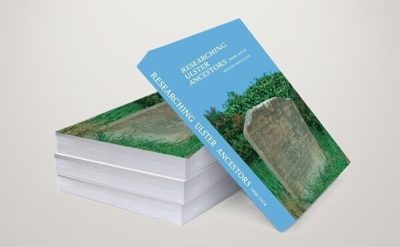
Researching Ulster Ancestors, 1800–1914 provides a comprehensive guide to the rich range of
genealogical sources available for the nine counties of Ulster during the “long nineteenth century,” up to the eve of the First World War. It not only identifies what records exist and where to find them, but also brings them to life through carefully chosen examples – demonstrating how they can be used effectively to uncover your family history.
Written by Dr William Roulston, author of the bestselling Researching Scots-Irish Ancestors: The Essential
Genealogical Guide to Early Modern Ulster, 1600–1800, Researching Ulster Ancestors, 1800–1914 will
become an indispensable resource for Irish family history research.
Read While You Wait
Why wait for your copy to arrive before getting started? Researching Ulster Ancestors, 1800–1914 is also
available as a “Read While You Wait” bundle.
With this option, you won’t have to wait for the physical copy to arrive at your door. Instead, you will receive instant access to the eBook as soon as you place your order meaning your research can begin straight away!
Click here to order the “Read While You Wait” Bundle
eBook
Prefer to read your books on a Kindle, iPad or eReader? You can also purchase the eBook of Researching
Ulster Ancestors, 1800–1914 on its own using the link below and start reading straight away.
Click here to order the Researching Ulster Ancestors eBook
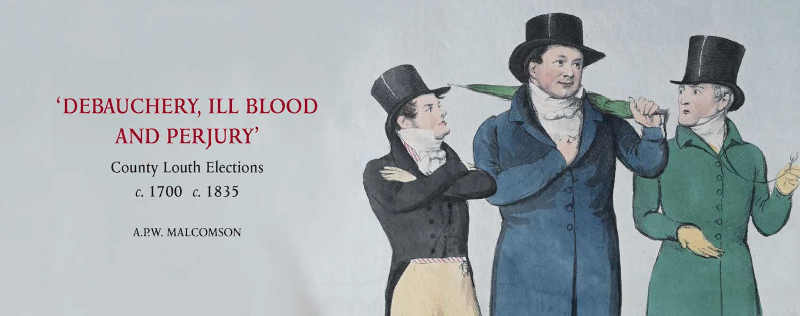
‘Debauchery, ill blood and perjury’: Louth elections, c. 1700–c. 1835
Book Launch
The Trustees of the Ulster Historical Foundation, request the pleasure of your company at the launch
of ‘Debauchery, ill blood and perjury’: Louth elections, c. 1700–c. 1835 by A.P.W. Malcomson.
Event Details
Date: Thursday, 04 June
Time: 18:30
Location: Collon Church of Ireland Church, Church Street, Collon, Co. Louth
Booking: Space is limited so reserving your place is essential. To RSVP email enquiry@uhf.org.uk,
or call +4491812073
Light refreshments will be served
Book Launch – Special Offer
If you plan to attend the launch, order your copy today!
Enter the code DebaucheryLaunchCollect at checkout on our online bookstore to save on postage costs
AND to receive an additional £5 off your order.
About ‘Debauchery, ill blood and perjury’
This is the first book-length study of an Irish county constituency over a period of nearly 150 years. Its
extended timespan makes it possible to trace the kaleidoscopic rise, fall and re-emergence of Co. Louth’s
political dynasties.
The book is about elections. But for almost the whole of this period landed property, and more specifically the exclusively freehold franchise which obtained until 1832, were the basis of electoral influence. So attention must be paid to the size, value and descent of family estates, to the leasing policy of their owners, and to the success with which they responded to ever-changing and -tightening regulations governing the unique Irish system of freeholder registration.
Family finances are another important consideration, because men could not fight elections if they could
not afford election expenditure. The book addresses all aspects of the lives of Co. Louth’s aristocracy and
gentry, since electoral alliances and manoeuvrings were only one aspect of their inter-relationship.
They had to co-operate with each other in county administration, which, as well as infrastructure and law
and order, included architectural initiatives such as the design and building of Dundalk’s iconic courthouse.
There were denominational as well as political differences between and among them, and class solidarity
smoothed religious antagonisms, even in the era of Catholic Emancipation. That era did, however, usher in one of the most dramatic changes of the period – the transition from a paternalistic style of politics to a new paradigm in which national issues and national party politics played a decisive part.
To compare the Hogarthian affray which took place after the formative election of 1768 with the mobbing
and intimidation of the freeholders at the famous election of 1826, is to compare two different political
worlds.